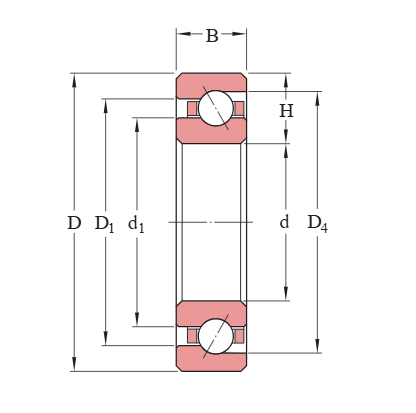
The KC047AR0 belongs to the KC series of Thin section angular contact bearings; it features the R0 low-internal-clearance specification and is constructed with bearing steel components and a brass cage. The 30°contact angle accommodates combined loading conditions, while the lightweight, compact design saves installation space; paired mounting enhances rotational rigidity, making it suitable for laser inspection equipment, small-scale radar systems, and precision automated rotating components.
Dimensions in Inches | Capacities in Pounds |
Approx.Wt. In lbs. |
Size | Land Diameters | Dynamic | Static |
Bore | Outside Dia. | L1 | L2 | C’BoreL3 | ISO Radial | Thrust | Radial | Thrust |
4.750 | 5.500 | 5.027 | 5.223 | 5.302 | 2,693 | 3,100 | 3,020 | 8,720 | .51 |
Thin section bearings are composed of four basic components: inner ring, outer ring, steel ball and cage.The cross-sectional dimensions of the inner and outer rings of bearings of the same series remain consistent, with uniform cross-sectional specifications and uniform wall thickness, and the cross-sectional size will not change as the inner diameter increases. An annular raceway is processed on the inside of the inner and outer rings, and the steel balls are evenly arranged in the middle of the two sets of raceways. The cage evenly separates the steel balls, fixes the position of the rolling elements, and prevents the steel balls from contacting and friction with each other. The inner and outer rings of the bearing have a thin-walled structure as a whole, the raceways are regularly formed, and the cross-sectional parameters of each component are standardized. Only the inner diameter specifications distinguish different models, and the rest of the structural cross-sectional dimensions remain the same.
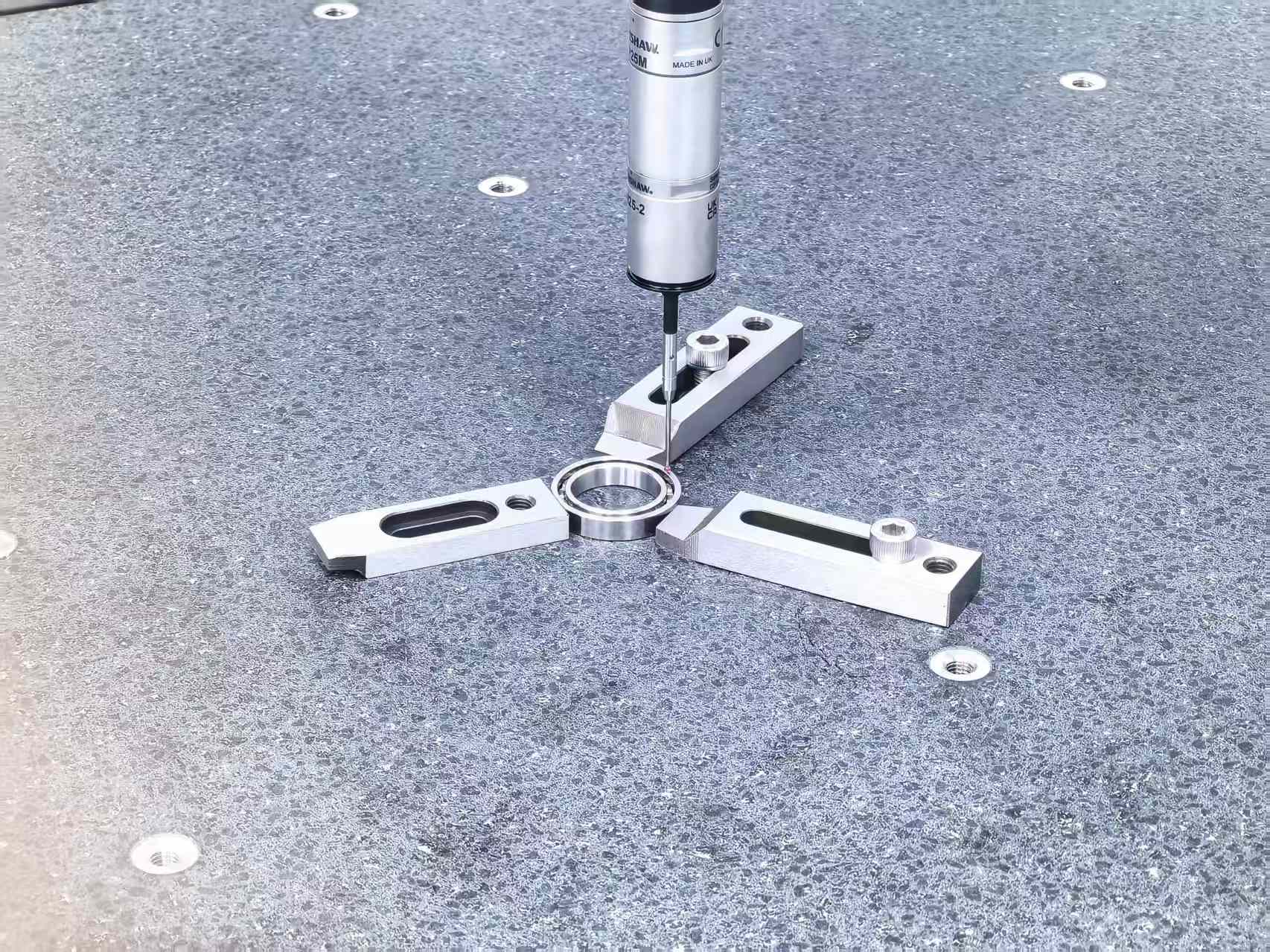
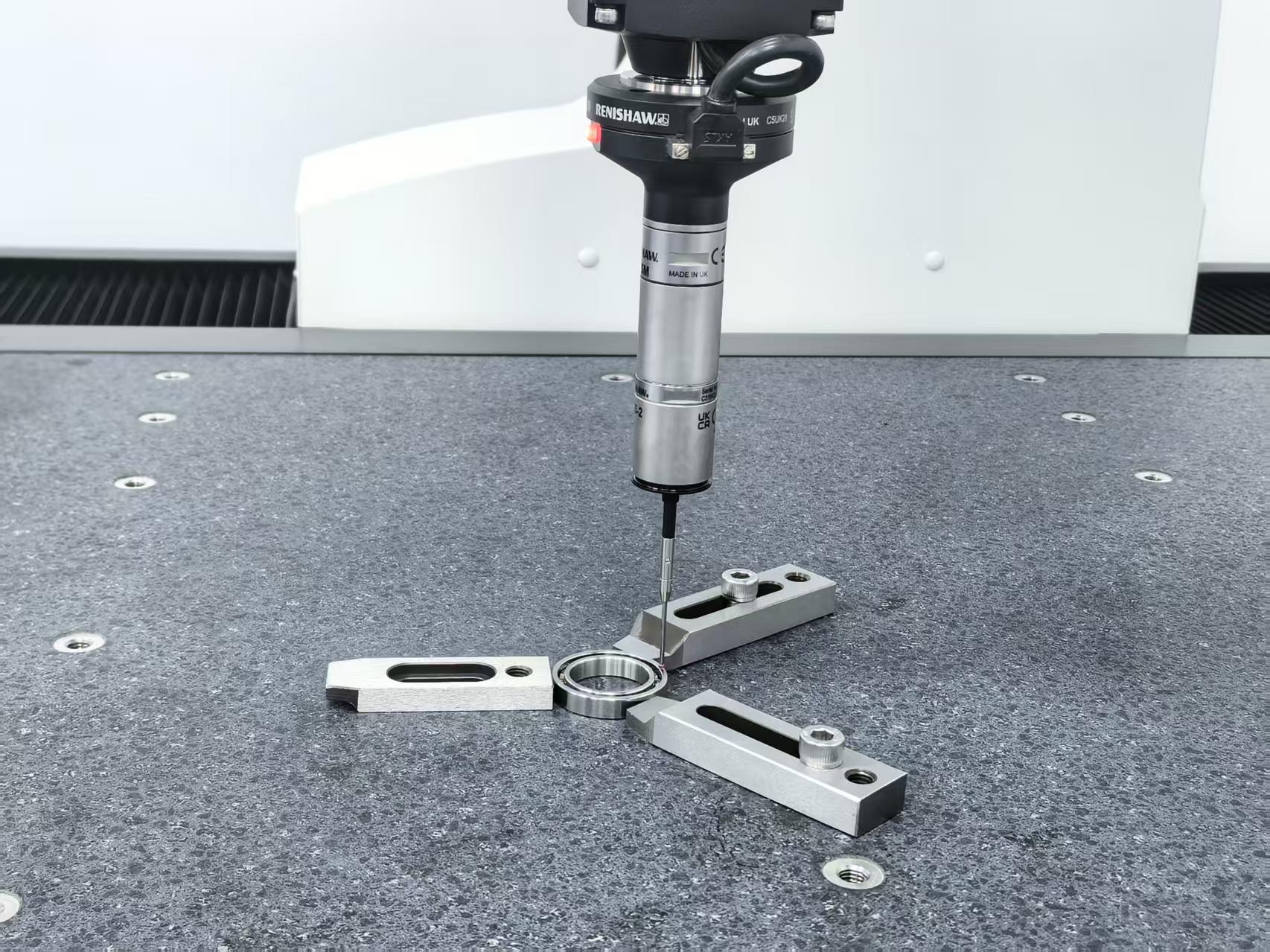
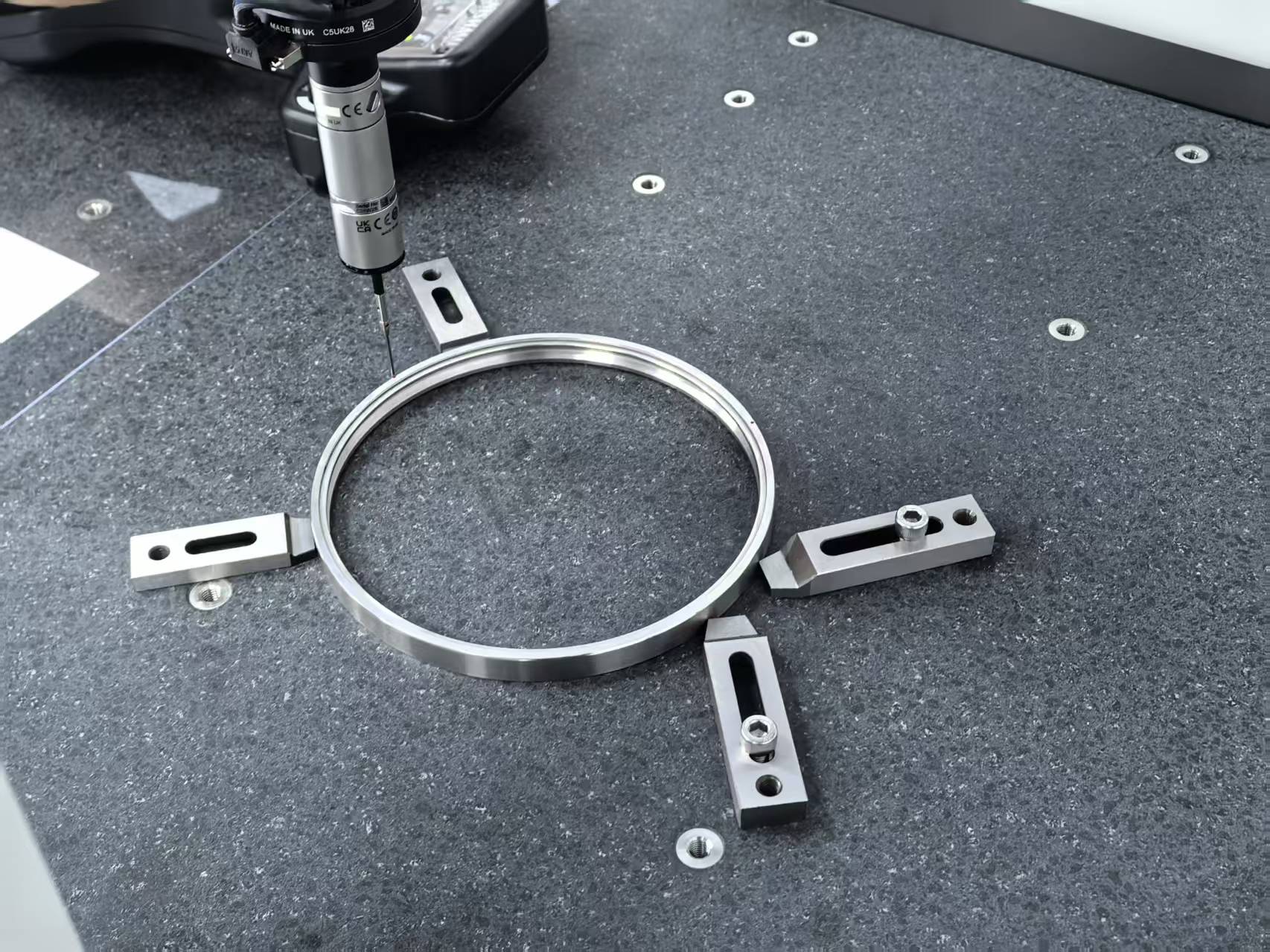
We also manufacture bearings made of 440C stainless steel—specifically model SC040R0. Compared to bearings made of GCr15 bearing steel, stainless steel bearings offer the following advantages:
1. High hardness and wear resistance: After quenching, the hardness is HRC58–62. The dense chromium carbide structure provides wear and fatigue resistance, making it suitable for high-speed and high-load operating conditions.
2. Corrosion and rust resistant: Resistant to moisture, salt spray, fresh water, weak acids, and food and pharmaceutical solutions, superior to ordinary chrome steel, suitable for medical, food, and marine environments.
3. Wide temperature stability: Withstands temperatures from -60℃ to 300℃, and is not prone to deformation or performance degradation under high and low temperature environments, making it suitable for high and low temperature precision equipment.
4. High dimensional accuracy: It can be polished to Ra<0.05μm, and with the constant cross-section design, the rotational run-out is small and the positioning is accurate.
5. Superior performance: It is more rust-resistant and has a longer service life than 52100 chromium steel; it is harder, more wear-resistant, and can withstand heavy loads than 316L steel.
Application Areas:
1. Precision Automation and Robotics
2. Food/Pharmaceutical/Medical Equipment (Clean and Corrosion Protection)
3. Semiconductor/Electronics Manufacturing Equipment (Dust-Free, High-Speed)
4. Marine/Outdoor/Corrosion-Resistant Equipment
5. High-Speed Light Industrial/General Precision Machinery
6. Aerospace/Military Precision Components