In the era of industrial automation, servo motors stand as the "power core" of precision equipment, driving everything from CNC machine tools to industrial robots with pinpoint accuracy. At the heart of these high-performance motors lies a critical component: servo motor bearings. But what exactly are servo motor bearings, and how do they differ from standard bearings? This article will clarify the servo motor bearings definition and reveal their irreplaceable role in precision motion control.
Definition & Essence: The Gap Between Servo Motor Bearings and Standard Bearings
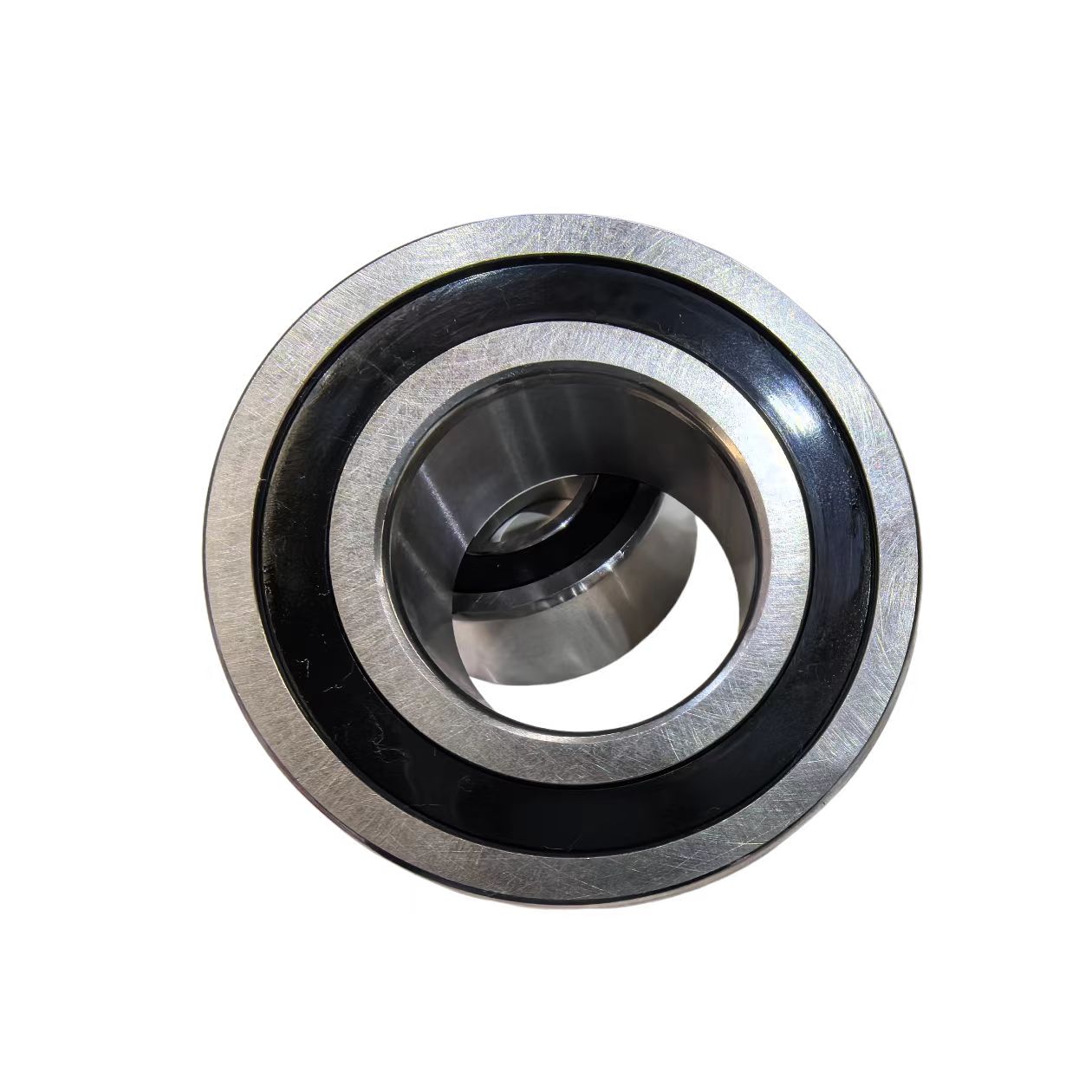
Servo motor bearings are specialized rolling bearings designed for servo systems, where their primary mission is to support rotational components while maintaining ultra-high precision during rapid start-stop and speed regulation cycles. The difference between servo motor bearing and standard bearing becomes apparent in three core dimensions, directly determining whether a servo motor can deliver its designed performance:
1. Precision: The "Measurement Benchmark" of Motion Accuracy
Servo systems demand micron-level position control, which places rigorous requirements on bearing precision. Servo motor bearings typically adopt P5, P4, or even P2 precision grades (per ISO standards), with inner diameter tolerance controlled within ≤0.008mm. This ensures minimal radial runout during rotation—critical for CNC machines that require consistent cutting accuracy. In contrast, standard motor bearings. (often P0 grade) have tolerances 3-5 times larger, making them unsuitable for applications where position deviation could ruin workpieces.
2. Rotational Speed: Adapting to High-Dynamic Operation
Servo motors frequently operate at variable speeds, including high-speed cycles (e.g., 15,000-20,000 rpm for spindle motors). Servo bearings are optimized with lightweight cages (e.g., PEEK materials) and refined raceway profiles to reduce centrifugal force and heat generation, achieving 1.5 times the limit speed of standard bearings. Standard bearings, by comparison, tend to experience lubricant degradation and cage deformation under such dynamic conditions, leading to premature failure.
3. Stability: The "Reliability Guarantee" for Closed-Loop Control
Servo systems rely on real-time feedback to adjust operation, so bearing stability directly affects control responsiveness. Servo motor bearings undergo strict dynamic balance testing to minimize vibration and noise, ensuring consistent friction torque even during frequent load changes. Standard bearings, which prioritize cost over consistency, may exhibit torque fluctuations that disrupt the servo system's closed-loop feedback, resulting in position errors or speed surges.
Three Core Functions: Why Servo Motors Cannot Operate Without Them
Beyond the differences from standard bearings, servo motor bearings fulfill three non-negotiable roles in precision motion control, forming the foundation of servo motor performance:
1. Load Support: Stabilizing Rotational Components
They bear both radial and axial loads generated by the motor's rotor and external mechanical transmission, preventing shaft deflection. For example, in industrial robots, servo bearings in joint motors support the weight of the arm while withstanding dynamic loads from movement, ensuring the arm stays on its programmed path.
2. Friction Reduction: Enhancing Efficiency and Longevity
Through precision manufacturing of rolling elements and raceways, servo bearings minimize friction coefficient (as low as 0.001-0.003), reducing energy loss and heat generation. This not only improves motor energy efficiency but also extends bearing service life by up to 50% compared to standard bearings in the same application.
3. Precision Guarantee: Enabling Micron-Level Control
Low runout and stable rotation ensure the servo motor's encoder accurately captures speed and position signals, allowing the drive to make precise adjustments. Without this precision, even advanced servo systems would fail to achieve the 0.01mm positioning accuracy required for electronic component assembly.
Industry Value: A $14.8 Billion Market Powering Automation
The importance of servo motor bearings is reflected in their booming market scale. In 2024, the global servo motor bearing market reached $14.8 billion, with a compound annual growth rate (CAGR) of 5.3%. This growth is driven by the global wave of industrial automation—from the surge in CNC machine tool demand in China to the expansion of industrial robot production in Europe and North America, every precision automation scenario relies on high-performance servo bearings.
As humanoid robots (requiring 30-40 servo motors per unit) and high-speed electric spindles gain traction, the demand for servo bearings with higher precision and durability is accelerating. They are no longer just "components" but core enablers of the automation revolution.
Basic Classification: Which Type Fits Your Application?
Servo motor bearings are categorized by structure, with three main types dominating industrial applications. We will explore each in depth in subsequent articles, but here's a quick overview to help you initially assess compatibility:
1. Deep Groove Ball Bearings
With a simple structure and low friction, they handle both radial and light axial loads, making them ideal for general-purpose servo motors (e.g., conveyors, packaging machinery). Common models include the 60 and 62 series.
2. Angular Contact Ball Bearings
Designed with contact angles, they excel at handling combined radial-axial loads and high speeds, perfect for high-precision scenarios like CNC machine spindles and robot joints. Precision grades often reach P4 or higher.
3. Tapered Roller Bearings
Their tapered design delivers exceptional load-carrying capacity, suitable for heavy-duty servo applications such as large-scale printing presses and automotive drive systems.
Find Your Perfect Servo Bearing Match
Understanding servo motor bearings definition and their core attributes is the first step to selecting the right component. Whether you need high-speed bearings for a spindle motor or heavy-duty bearings for a robot arm, clarifying your motor's precision, speed, and load requirements will narrow down your options.
Stay tuned for our next article, where we'll dive into "Key Characteristics of High-Quality Servo Bearings" to help you evaluate product quality like a professional. For personalized recommendations, contact our engineering team today—we'll match you with the optimal servo bearing solution.