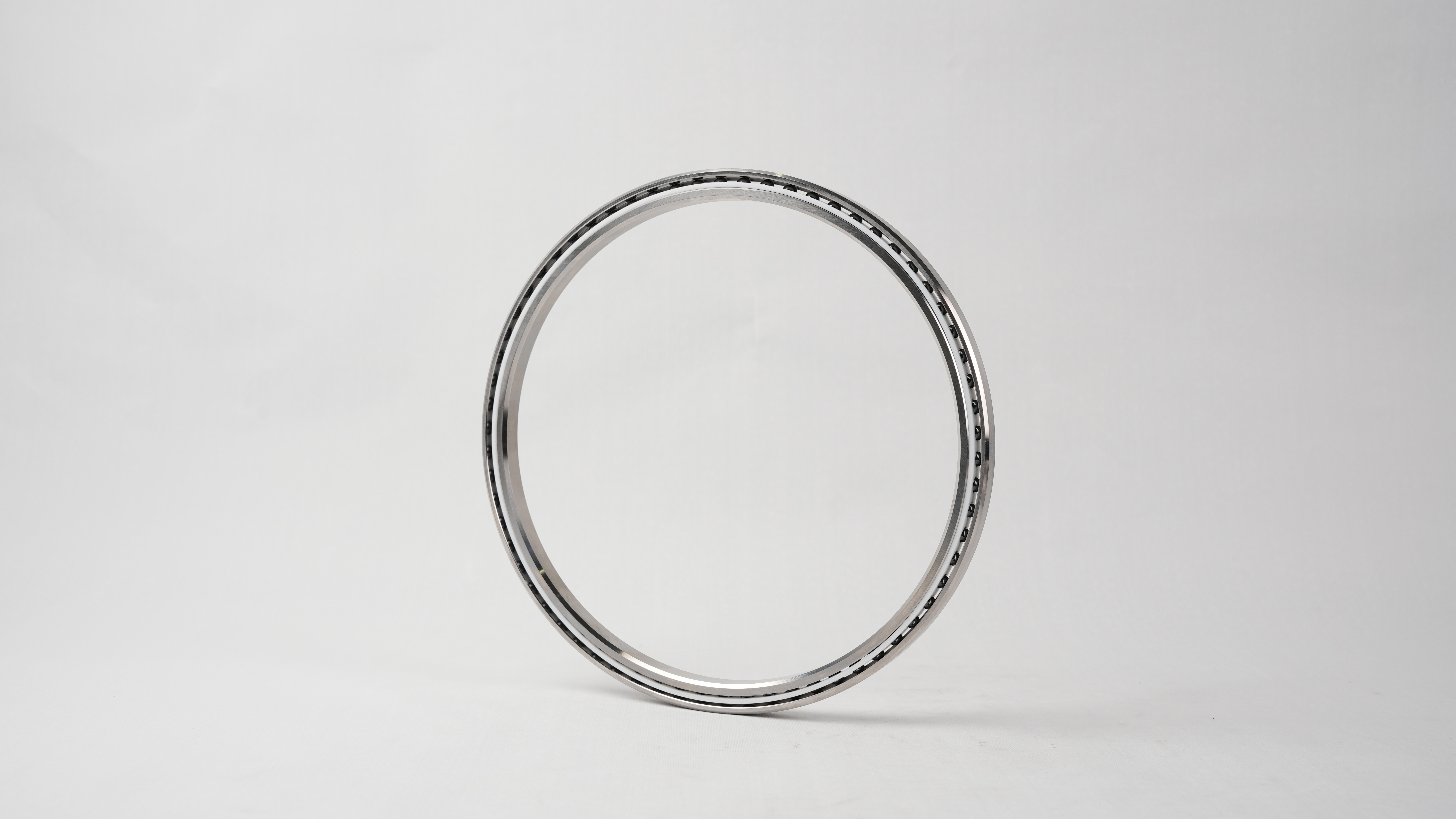
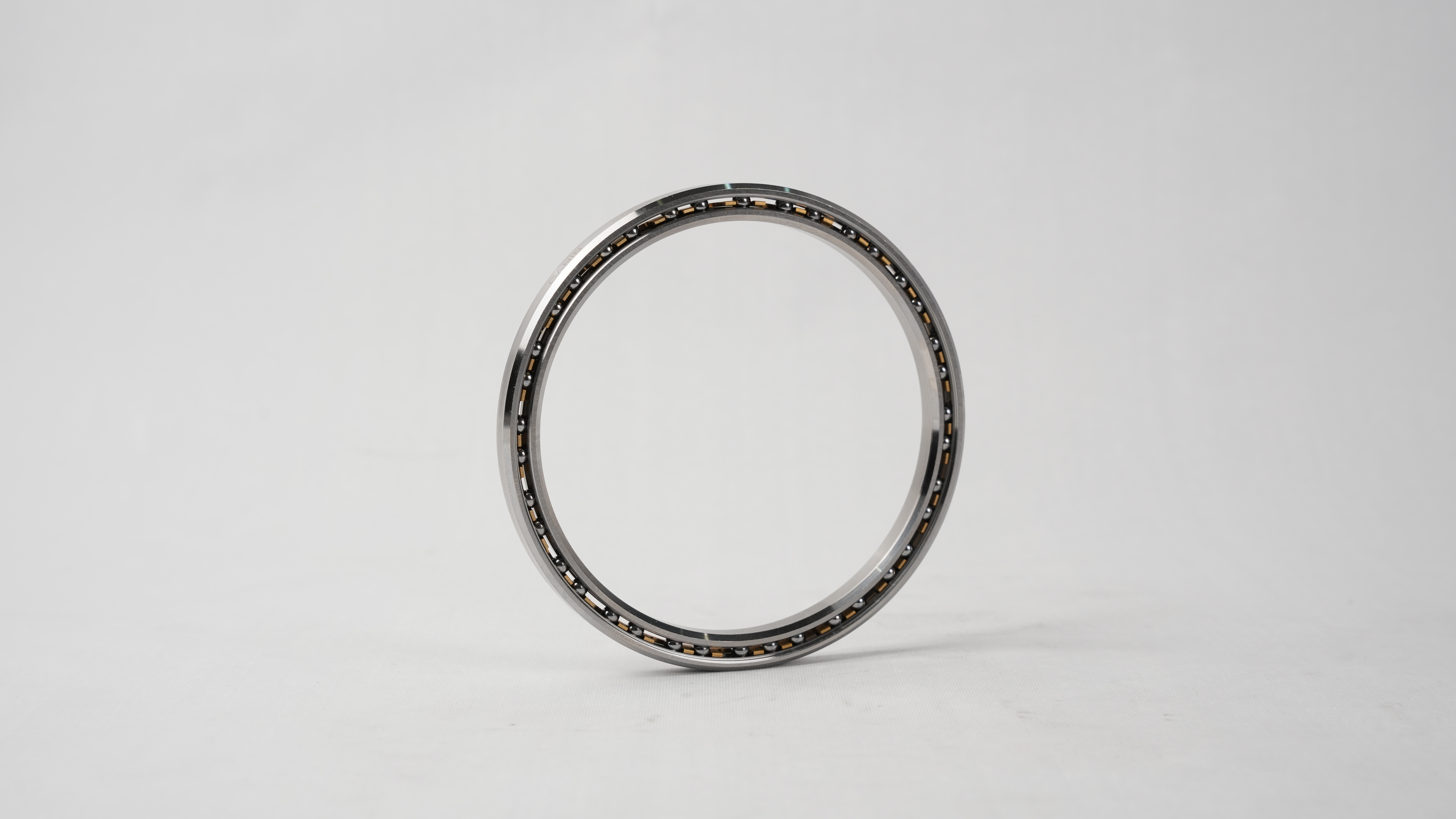
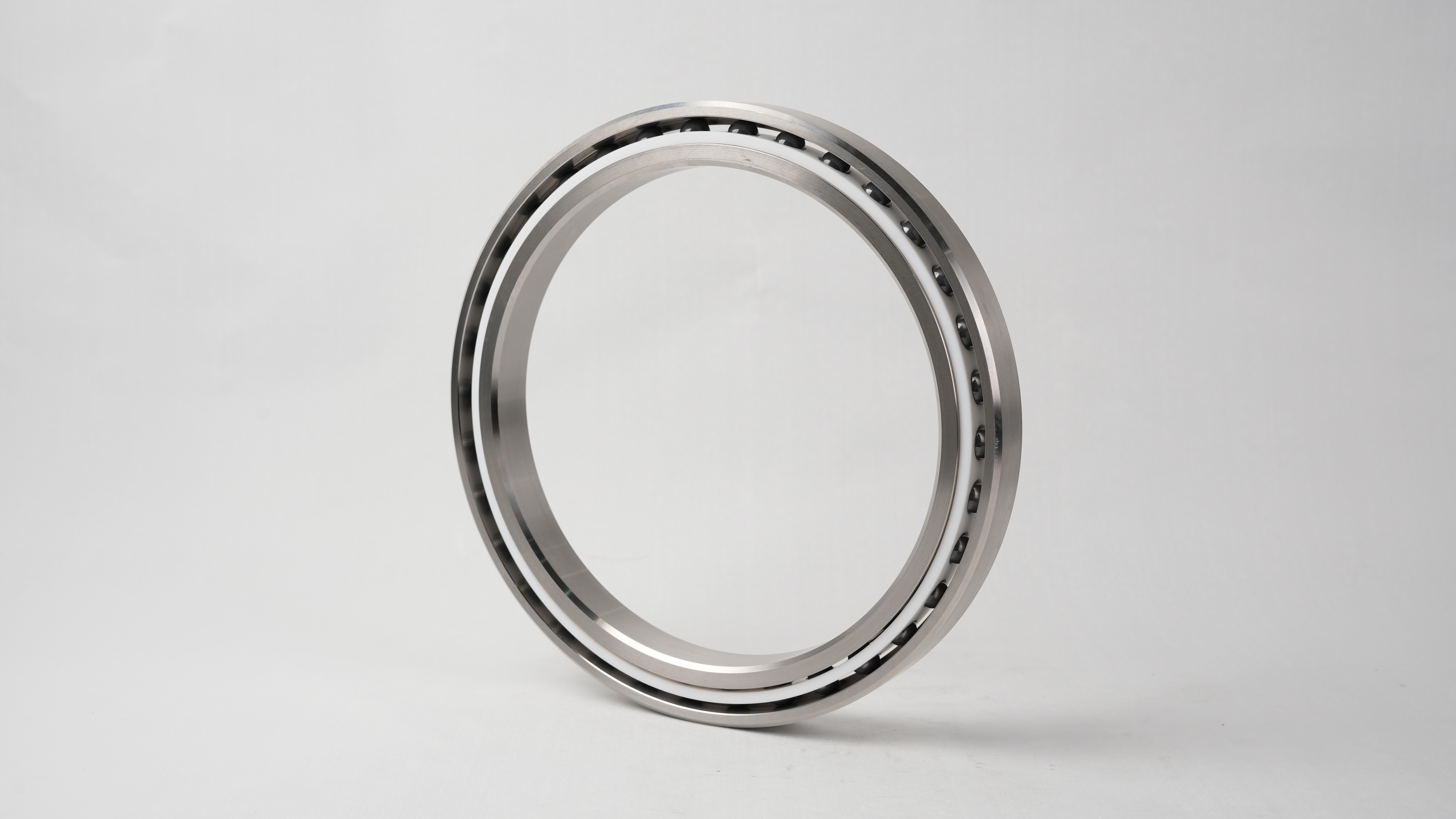
In precision rotary equipment, the material and structural design of the bearings together determine the overall performance of the machine, not just its corrosion resistance. It also affects contact fatigue, rotational runout, torsional stiffness, light-weighting effect, service life, and overall cost of use.
In thin-section bearing solutions, 440C stainless steel thin-section bearings are widely used, taking into account high hardness, wear resistance, stable dimensions, and lightweight structure. After heat treatment, the hardness can reach HRC58-62, making it suitable for installations with limited space and requiring moderate corrosion resistance.
Compared to 304 and 316 austenitic stainless steel, 440C offers higher hardness, wear resistance, and fatigue resistance, making it suitable for thin-walled applications. Thin-section raceways and rolling elements are subjected to cyclic alternating stress and cannot undergo permanent deformation.
304/316 has stronger corrosion resistance, but insufficient hardness, which cannot meet the mechanical load requirements of thin-section bearings. In robotics, optoelectronics, and precision rotary table equipment, the 440C is a compromise that balances lightweight, mechanical strength, and moderate corrosion resistance.
Even with mature 440C thin-walled bearings, premature failure can still occur if the operating conditions are not matched or key operating parameters are ignored.
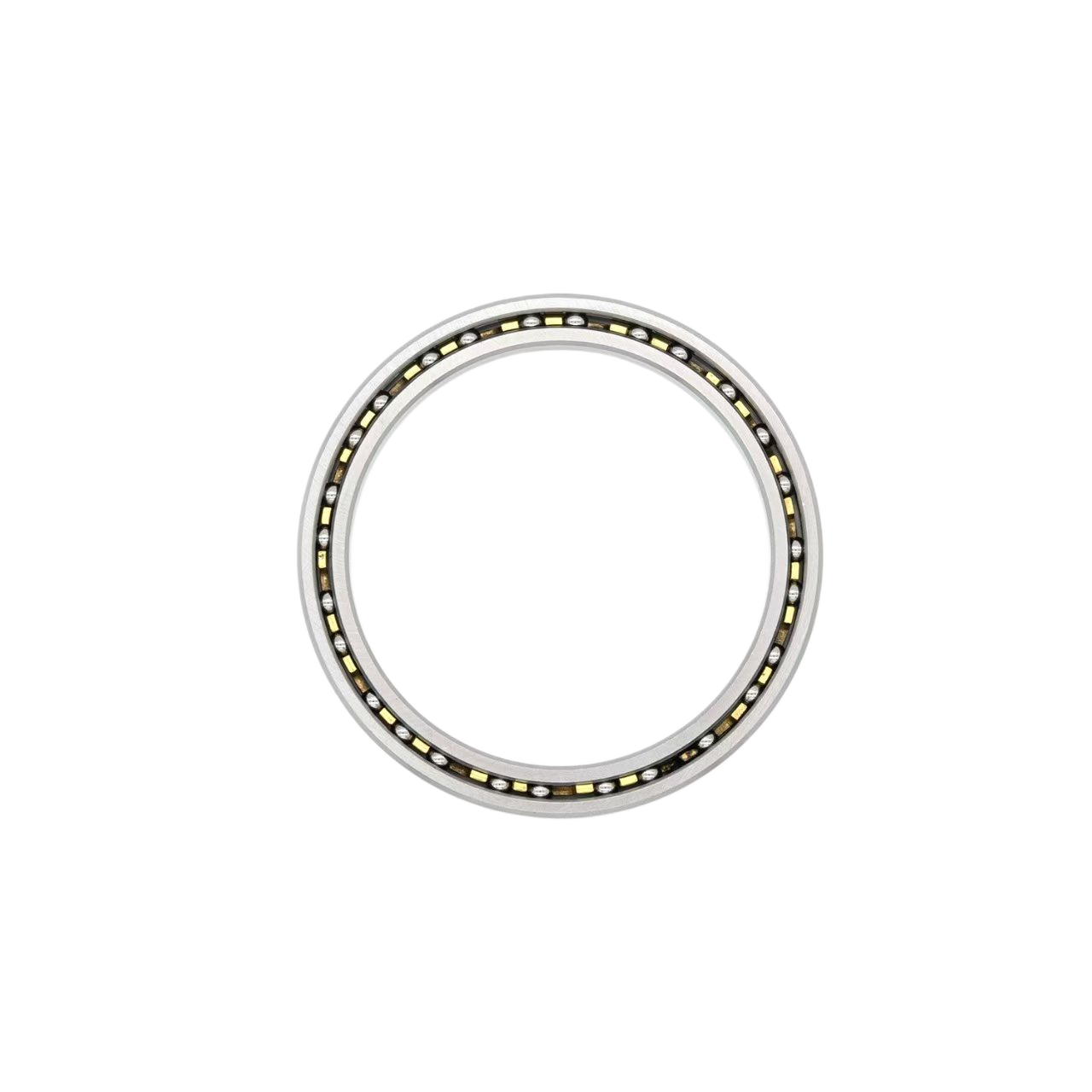
1. Causes of failure and priority troubleshooting points
The failure of 440C stainless steel bearings is the result of multiple factors working together. When troubleshooting, the principle of "from the outside to the inside, and from the easy to the difficult" should be followed.
First priority to check: lubrication and contamination issues
This is the most common and easily overlooked cause of failure. Improper lubrication leading to fretting wear or cage breakage is the main cause of failure. Meanwhile, lubricant contamination (such as dust and debris) can damage the contact surfaces, causing progressive damage. During troubleshooting, first check whether the grease has deteriorated (turned black, emulsified, hardened), and confirm whether a solvent containing chloride ions was used for cleaning, which may lead to stress corrosion cracking.
Second, investigate: material and manufacturing defects.
440C is a high-carbon, high-chromium martensitic stainless steel, with a complex heat treatment process, making it one of the more difficult steel grades to heat treat. Here are some key inherent defects:
· Surface decarburization: This is the main cause of cracking during quenching or cryogenic treatment. The decarburized layer transforms during quenching, forming a hard and brittle "shell," which is prone to cracking during subsequent cooling.
· Quenching cracks and retained austenite: A large amount of retained austenite exists in the microstructure of 440C stainless steel after quenching. If tempering is insufficient, the retained austenite will slowly transform during use, leading to dimensional changes. While cryogenic treatment can transform retained austenite, improper processing can also lead to cracks due to excessive structural stress.
· Metallurgical defects: Inclusions and other defects in the material itself are also one of the causes of cracks.
Final checks: Environmental and overload issues.
· Corrosion: The corrosion resistance of 440C relies on the chromium oxide film (passivation layer) on the surface. In high humidity, strong acid/alkali, salt spray, or chlorine-containing environments, this passivation film may be damaged, leading to localized corrosion.
· Mechanical overload: For thin-walled bearings, fatigue ductile fracture is the critical failure mode. Overload or improper installation can directly lead to brittle fracture.
Recommended priority troubleshooting process:
① Check lubrication status → ② Analyze operating environment (temperature, humidity, corrosive media) → ③ Check installation and clearance → ④ Perform material and fracture analysis.
2. Reasons for widespread application
The reason why 440C thin-walled bearings with constant cross-section are widely used is because their unique combination of performance meets the demanding requirements of modern industry.
· Excellent corrosion and wear resistance: 440C stainless steel can effectively resist corrosion from moisture, salt spray, food cleaning agents and weak acids and alkalis.Meanwhile, its hardness can reach HRC 58-62, ensuring wear resistance under high-speed operation.
· Ultimate lightweight and space saving: With a thin-walled design of equal cross-section, the weight can be reduced by more than 50% compared to standard bearings of the same inner diameter, and the radial installation space is saved by about 40%. This makes it an ideal choice for space-constrained fields such as robotics, semiconductor equipment, and aerospace.
· High precision and stability: This series of bearings typically achieves a precision level of P5 or P4, and P2 level can be customized. It has a wide operating temperature range (typically -40℃ to 150℃) and can maintain stable performance in a variety of harsh environments.
3. Common causes of early failure
Early failure is often closely related to improper operation and maintenance during the initial stage of use:
· Improper installation: When installing by hand, the salt and acidic substances in sweat can corrode the bearing surface and accelerate the destruction of the passivation film. If bumps or knocks occur during installation, it may cause localized stress concentration.
· "Break-in" issues during the initial lubrication phase: In the initial operation of a new bearing, improper selection of grease or inappropriate filling amount (too much or too little) may lead to fretting wear or abnormal temperature rise.
· Insufficient environmental adaptability: In humid or slightly corrosive environments, if bearings with insufficient sealing ratings are selected, corrosive media may penetrate prematurely, leading to pitting or stress corrosion.
Potential material defects: As mentioned earlier, if the bearing itself has heat treatment defects such as surface decarburization or excessive residual austenite, it will manifest as cracks or spalling in the early stages of service.
4. Measures to reduce the risk of failure
Scientific management throughout the entire life cycle can significantly extend the life of bearings.
· Precise lubrication management: This is the core of maintenance. Select the appropriate grease based on the operating conditions (e.g., food-grade NSF H1 certified grease, or high-temperature synthetic oil-based grease), and control the filling amount (30%-50% for low-speed heavy loads, and 15%-25% for high-speed light loads). Establish a condition-based monitoring mechanism to predict maintenance needs by monitoring temperature rise, vibration, and noise.
· Proper installation and cleaning: Always use specialized tools and clean gloves for installation. Do not use solvents containing chloride ions when cleaning; use a special cleaning agent or a neutral detergent.
· Environmental control and surface strengthening: Avoid operating the bearing under drastic temperature fluctuations or extreme temperature and humidity conditions. For extreme environments, PVD/CVD coatings (such as TiN, DLC) can be used to improve surface hardness, or hybrid ceramic balls (silicon nitride) can be used to reduce friction and heat generation.
· Optimize selection and design: Select the correct internal structure (Type C, Type A, Type X) based on the specific load. For high-speed or special environments, a PEEK high-temperature resistant cage can be selected.
5. Performance differences caused by manufacturing quality
The quality of the manufacturing process directly determines the final performance and lifespan of the bearing.
· Heat treatment process is key: high-quality manufacturers will use a standardized process of vacuum quenching + deep cryogenic stabilization to ensure that the hardness is stable at HRC 58-62 and effectively control the amount of residual austenite. However, poor process control can lead to fatal defects such as decarburization and quenching cracks.
· Precision machining capability: The walls of the thin-walled bearing with constant cross-section are extremely thin, which requires extremely high machining accuracy. High-quality products can achieve micron-level dimensional and geometric tolerance control, ensuring P4 or even P2 level accuracy. This not only ensures smooth operation but also directly affects the bearing's load-bearing capacity and lifespan.
· Material and design consistency: Materials are selected strictly in accordance with AISI 440C standards, and a 1:1 original size interchangeable design is adopted to ensure stable product performance and can directly replace imported products.
6. Other stainless steel grades and their applicable scenarios
Different grades of stainless steel have different strengths, and the appropriate grade should be selected based on the specific working conditions.
Brand | Core Features | Hardness (HRC) | Applicable Scenarios |
440C | High hardness, high wear resistance, and moderate corrosion resistance | 58-62 | High-speed, high-load, and wear-resistant applications, such as precision instrument spindles and industrial robot joints. |
440 / 420 | With a hardness below 440C, it has better toughness (420 has better corrosion resistance). | The 440 series is slightly lower; the 420 is around 50-55. | For light-load or toughness-required environments, it can be considered an economical or toughness-reliable alternative to the 440C. |
304 | Austenitic stainless steel is highly resistant to acid and alkali corrosion and is non-magnetic. | ≤200 HB | Lightly loaded environments with strong corrosion, humidity, and food contact, such as food processing equipment and chemical pumps and valves. |
316 | With the addition of molybdenum to 304 stainless steel, it exhibits excellent resistance to chloride ions and seawater corrosion. | ≤200 HB | Extremely corrosive environments such as marine platforms, strong chemical corrosion, and medical implants. |
Summarize
The core value of 440C stainless steel thin-walled bearings with uniform cross-section lies in the perfect combination of high corrosion resistance, high hardness, and ultra-lightweight design. Its failure is the result of the combined effects of lubrication management, manufacturing defects, installation and maintenance, and environmental factors.
To ensure its long-term reliable operation, we must abandon the misconception that "440C will never rust" and focus on precise lubrication management, standardized installation and maintenance, and reasonable selection based on working conditions. For extremely corrosive environments, austenitic stainless steels such as 304 and 316 can be considered; for ultra-high speed or scenarios requiring extreme wear reduction, hybrid ceramic ball bearings are a better choice. Ultimately, controlling the entire chain from materials, design, manufacturing to use and maintenance is the key to maximizing the performance advantages of the 440C bearing.