440C bearings are made of martensitic stainless steel: a high-carbon, high-chromium material that can be hardened through quenching and tempering heat treatment. Its microstructure is martensitic, and its hardness and strength can be artificially adjusted and strengthened. It is a typical structural wear-resistant material.
316L stainless steel bearings are austenitic stainless steel: 316L stainless steel bearings are ultra-low carbon austenitic corrosion-resistant stainless steel, belonging to a completely different material system from 440C martensitic stainless steel Bearing. Their performance, applications, and manufacturing processes differ greatly. As a low-carbon, molybdenum-containing material, it cannot be hardened by heat treatment; only solution treatment can refine its microstructure. Its hardness is inherently fixed and cannot be increased. It has good toughness and does not rust, but it is not wear-resistant -and cannot withstand heavy loads.
Depending on the specific working conditions, different choices can be made for retainers made of the two materials.
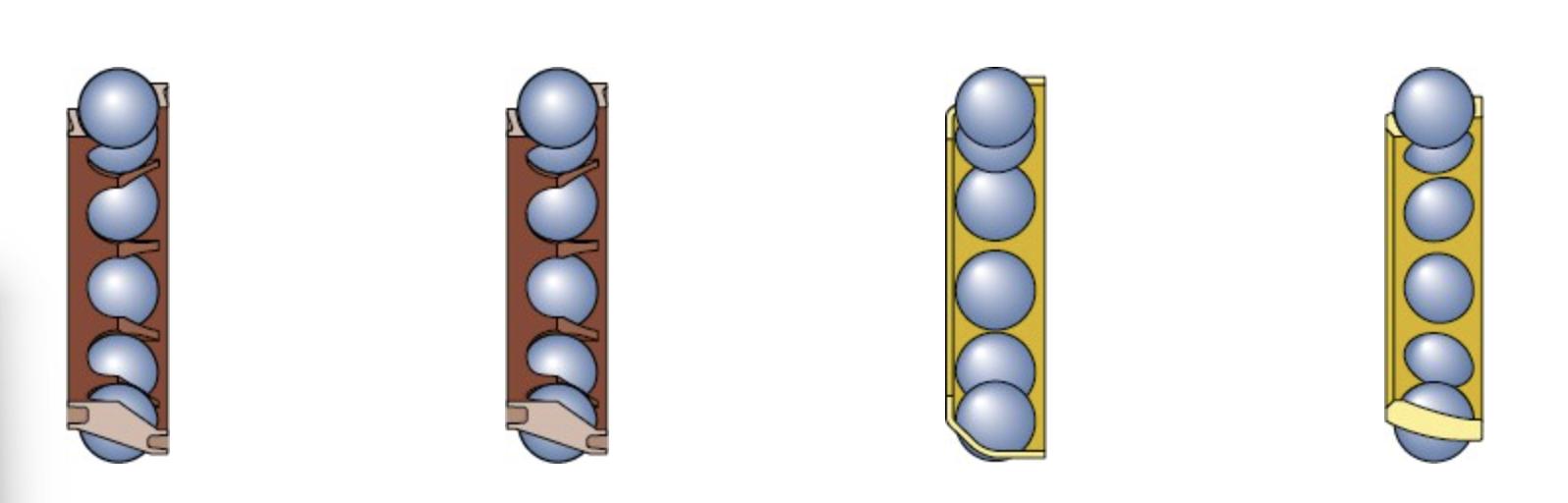
Commonly Used Cage Types for 440C Stainless Steel Bearings:
I. Standard Configuration
-- Material: 304 Stainless Steel (Austenitic, Non-magnetic/Weakly Magnetic)
-- Structure: Wave-shaped cage (small to medium-sized), Crown-shaped cage (miniature)
-- Features: Corrosion resistant, high strength, suitable for -60℃~+300℃
-- Applications: Food, medical, general humid environments
II. Commonly Used Alternative Cages
316 Stainless Steel: Stronger corrosion resistance (containing Mo), used in acid/alkali/seawater environments
-- Nylon (PA66): Low noise, self-lubricating, ≤120℃, medium to low speed
-- PTFE (Polytetrafluoroethylene): Resistant to strong acids and alkalis, ≤200℃, low load
-- PEEK: High temperature resistance (≤250℃), corrosion resistant, high strength, high-end applications
-- Phenolic resin: High speed, low noise, insulation, ≤150℃
III. Selection Reference
-- Standard operating conditions: Select 304 Stainless Steel
-- Strong corrosion: Select 316 Stainless Steel or PTFE
-- Low noise/Insulation: Choose nylon or phenolic resin. High temperature/high speed: Choose PEEK or phenolic resin.
Cages for 316L Stainless Steel Bearings
I. Standard: 316L Stainless Steel Cage
Material: 316L (00Cr17Ni14Mo2), ultra-low carbon + molybdenum, stronger resistance to chlorides/seawater/acids and alkalis
-- Structure: Wave-shaped (small to medium-sized), crown-shaped (miniature), solid/machined (large)
-- Features: No galvanic corrosion of the same material, non-magnetic, strongest corrosion resistance, -60℃~+300℃
-- Applications: Food, medical, marine, chemical, semiconductor, MRI non-magnetic equipment
II. General Alternative: 304 Stainless Steel Cage (Most Common)
-- Material: 304 (0Cr18Ni9), austenitic, non-magnetic, high cost-performance ratio
-- Structure: Stamped wave-shaped/crown-shaped, lower cost than 316L
-- Features: Good corrosion resistance, sufficient strength, -60℃~+300℃
-- Applications: General humid, salt spray, mild acid and alkali environments
III. Non-metallic Cages (Special Conditions)
-- PA66/Glass fiber reinforced (TN9): ≤120℃, low noise, self-lubricating, insulating; food-grade.
-- PTFE (polytetrafluoroethylene): ≤200℃, resistant to strong acids and alkalis, low load; chemical/highly corrosive.
-- PEEK: ≤250℃, corrosion-resistant, high-end chemical/medical.
Comparison of Core Hardness and Wear Resistance:
-- 440C Stainless Steel Bearings: After heat treatment, the hardness is HRC58–62. Rich in hard chromium-carbon compounds, they exhibit extremely strong wear resistance, fatigue resistance, and crushing resistance, making them suitable for long-term dynamic operation, friction transmission, and heavy-duty applications.
-- 316L Stainless Steel Bearings: Their original hardness is only HB180–220 (approximately HRC20). They are relatively soft and prone to wear, powdering, and increased clearance due to friction. After a period of dynamic operation, they may experience loosening, jamming, and precision failure.
Comparison of Corrosion Resistance and Rust Prevention:
-- 440C Stainless Steel Bearings: Resistant to mild corrosion from moisture, salt spray, fresh water, weak acids, and food/pharmaceutical solutions, meeting the requirements of typical humid industrial conditions; however, lacking molybdenum, they are not resistant to strong acids, strong alkalis, or high-concentration salt solutions.
-- 316L Stainless Steel Bearings: Contains molybdenum and features an ultra-low carbon formula, resulting in significantly superior corrosion resistance, acid and alkali resistance, seawater resistance, and chemical solvent resistance compared to 440C. It is a corrosion-resistant stainless steel, but this comes at the cost of reduced wear resistance and load-bearing capacity.
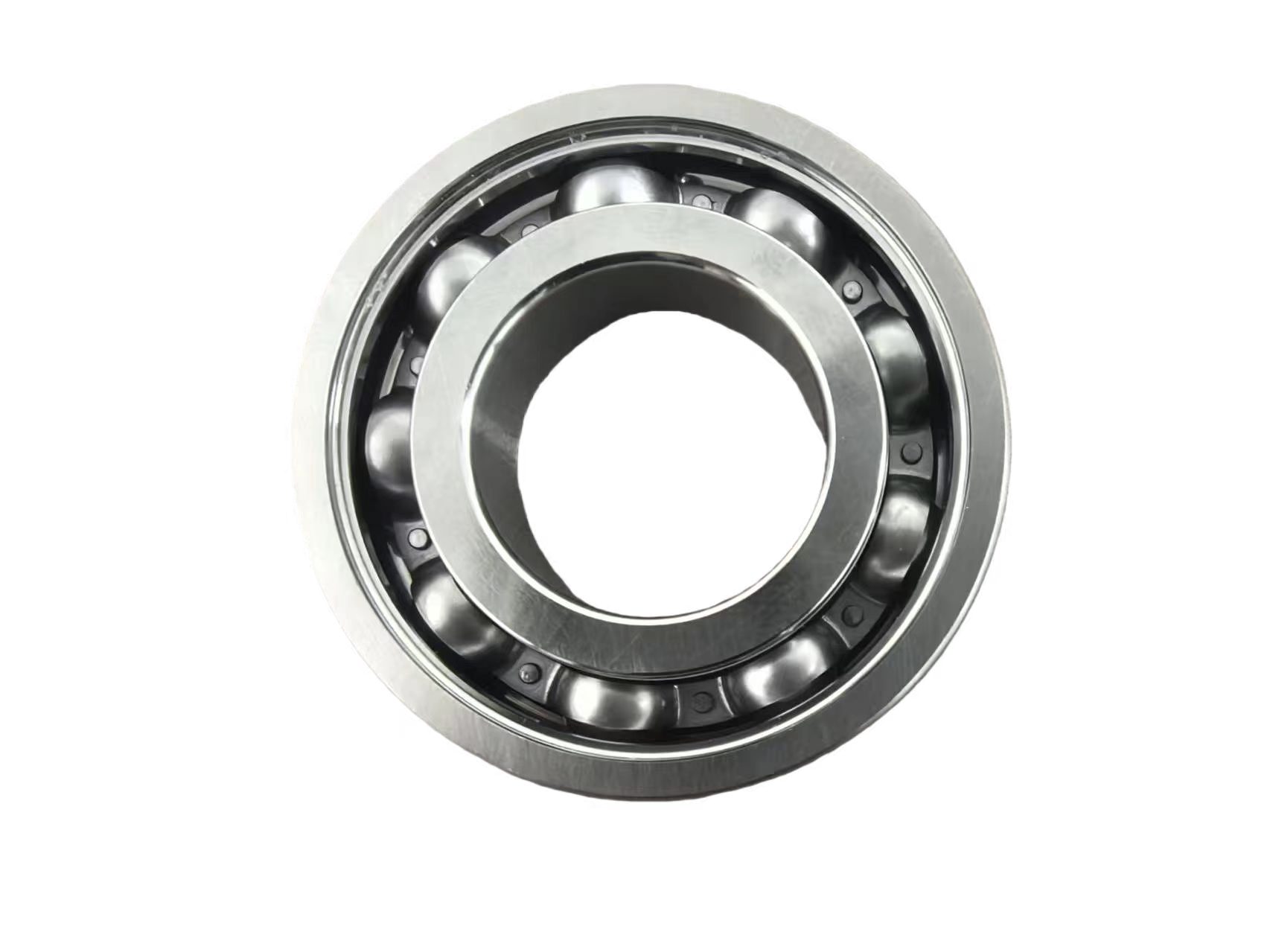
Load-bearing strength and deformation resistance:
-- 440C stainless steel bearings: High rigidity, stable structure, can withstand radial and axial combined loads, not easily deformed under heavy loads, suitable for precision transmission and continuously operating equipment.
-- 316L stainless steel bearings: High toughness, poor rigidity, easily deformed and crushed under stress, only suitable for light-load, static, and non-frictional fixed parts.
Differences in Precision and Service Life
-- 440C Stainless Steel Bearings: Mirror polishable, high raceway precision, low coefficient of friction, quiet and stable operation, minimal wear over long-term use, and a service life 3-8 times that of 316L bearings.
-- 316L Stainless Steel Bearings: Wear quickly in the later stages of use, with continuously increasing clearance, prone to bearing wobble, abnormal noise, and transmission accuracy deviation; unsuitable for precision dynamic equipment.
Temperature Adaptability
-- 440C Stainless Steel Bearings: Wide temperature range (-60℃~300℃), not easily softened by high-temperature annealing, and exhibits strong operational stability.
-- 316L Stainless Steel Bearings: Excellent low-temperature and high-temperature resistance, but the material hardness remains relatively low at high temperatures, failing to address the weakness in wear resistance.
Precise Differentiation of 440C and 316L Bearing Selection Scenarios
-- Scenarios Where 440C Stainless Steel Bearings are Preferred:** Equipment requiring rotation, friction, load-bearing capacity, precision, and wear resistance: food machinery, medical transmission systems, precision instruments, automation equipment, motors, outdoor salt spray transmission systems, dynamic components in water treatment, etc.
-- Scenarios Where 316 Stainless Steel Bearings are Preferred:** Equipment with minimal rotation, light load static conditions, and highly corrosive environments: strong acid and alkali equipment, seawater immersion fixtures, static chemical components, corrosion-resistant mounting brackets, and purely rust-resistant components without transmission.